Roma Political School
Structured capacity-building in political participation, leadership and public policy.
-
21
young participants from 12 municipalities
-
52%
young Romani women
-
50 h
of teaching in six modules
-
16
Roma and non-Roma speakers
The problem
Roma citizens vote, but are almost entirely absent from candidacy, party structures and public debate. Political participation without political preparation stops at the ballot box.
Objectives
- Strengthen political participation and civic engagement
- Build leadership skills and policy understanding
- Prepare Roma who stand for office, not only vote
What the project did
The Roma Political School in Albania was run with the support of the Council of Europe, in line with its Strategic Action Plan for Roma and Traveller Inclusion 2020–2025. It brought together young Roma and non-Roma from across the country for six modules, from the rule of law and political systems to advocacy and “artivism”.
- Selection. 24 applications came from 11 municipalities; 21 young people from 12 municipalities took part, and 52% of them were young Romani women.
- Six modules. 27 sessions and 50 hours of teaching on more than 21 topics, given by 16 Roma and non-Roma academics and professionals from Albania and abroad.
- Identity and history. Roma identity and history; anti-Roma rhetoric in politics, the media, literature and popular culture.
- Rights and organising. Minority rights, community organising and mobilisation, and Roma women’s emancipation and leadership.
- Policy and law. Rule of law and social justice; good governance, the policy cycle and how to influence policy; advocacy and lobbying with real-life cases.
- Voice and leadership. Leadership styles, communication, presentation and debating skills, using one’s own media, and art as political activism.
- Learning by doing. Individual and group mentoring, electoral campaign and debate simulations, case studies, public speaking and field study visits.
Results
- 21 participants from 12 municipalities took part.
- 52% of participants were young Romani women.
- 50 hours of teaching across 27 sessions.
- 16 speakers, including Roma academics, journalists, activists and public officials.
Impact
Among the participants were cultural and community mediators already working in their municipalities. The school gave them, and young people starting out, the political vocabulary and the network to move from voting to taking part in decisions.
In pictures
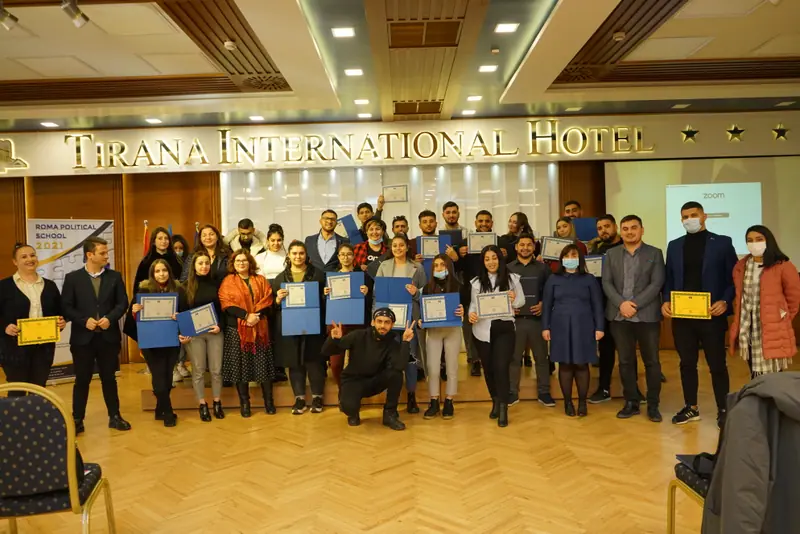
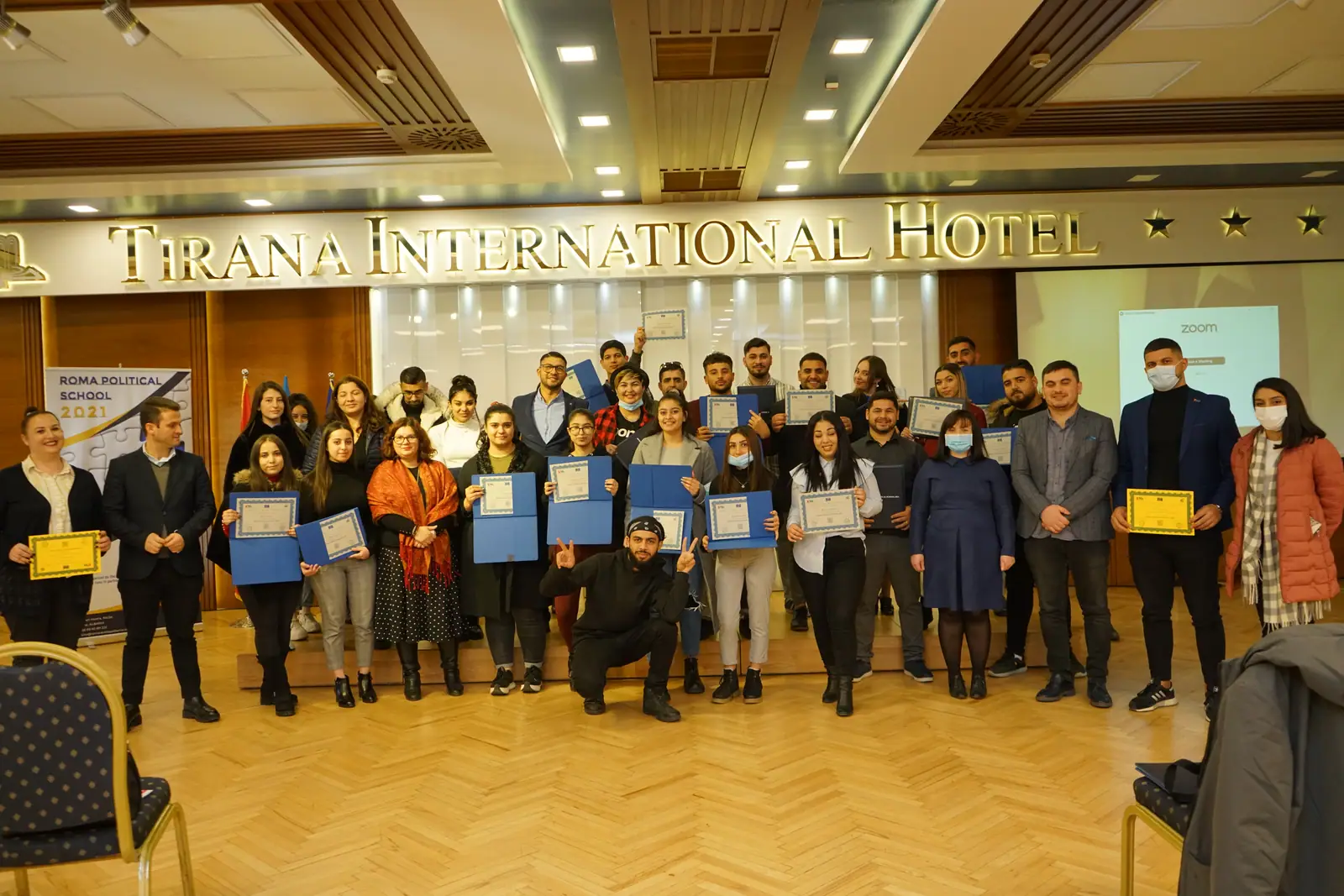
The 2021 cohort at the closing conference, Tirana 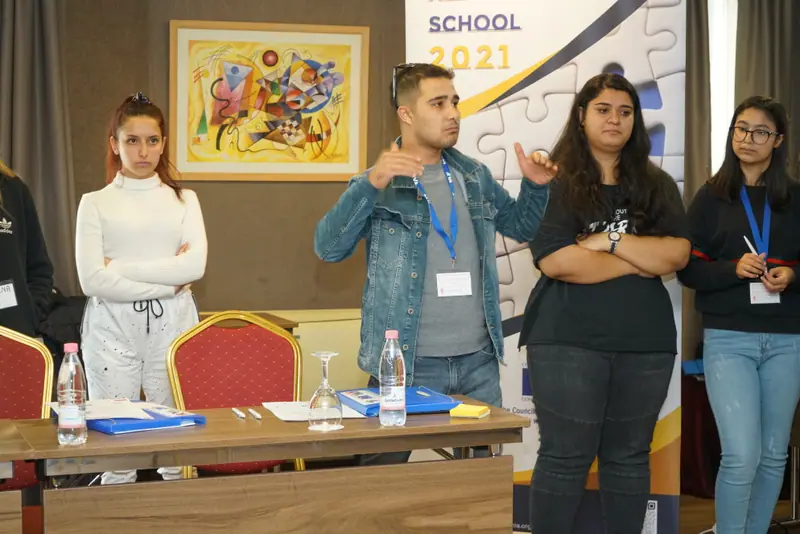
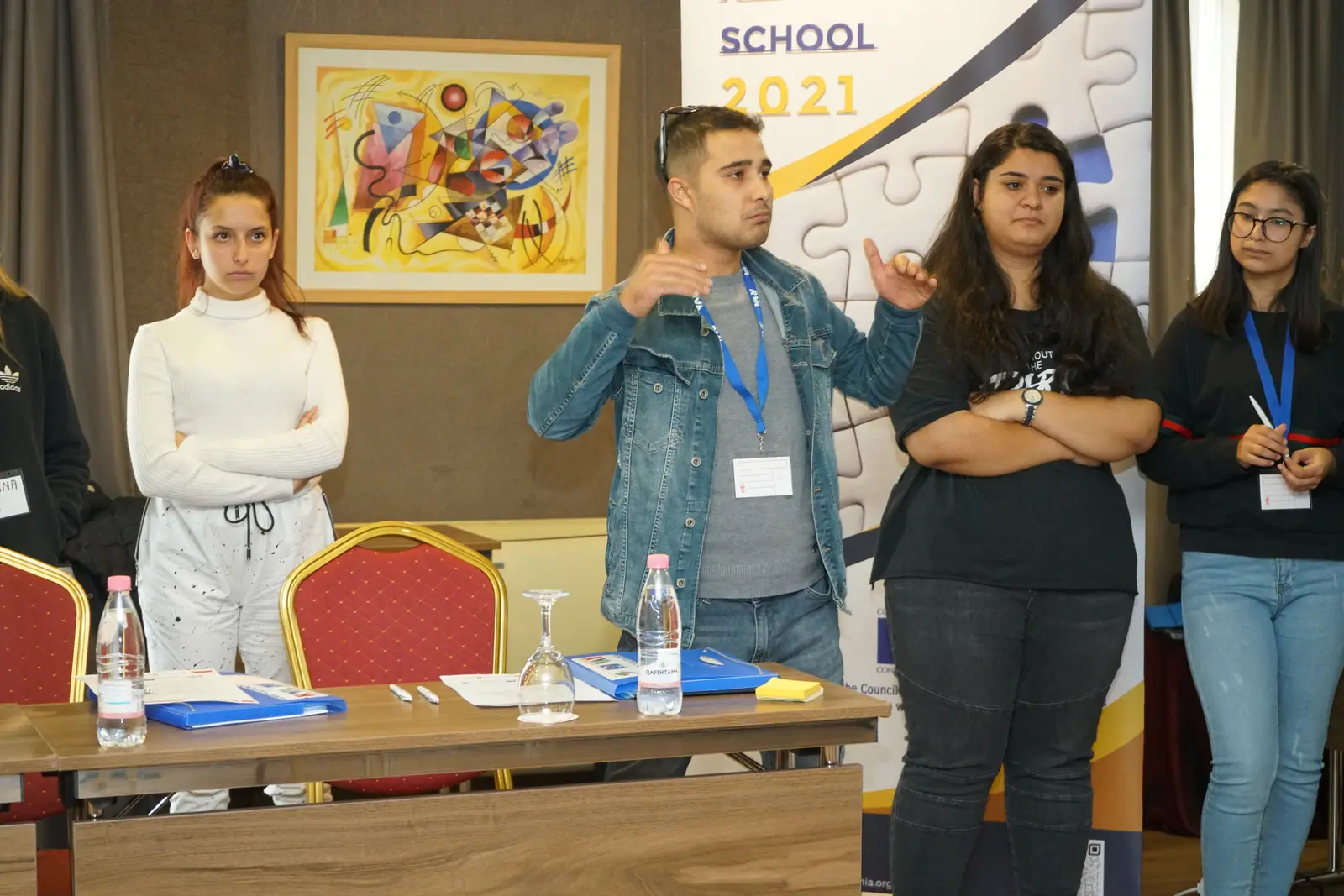
Presenting group work, October 2021 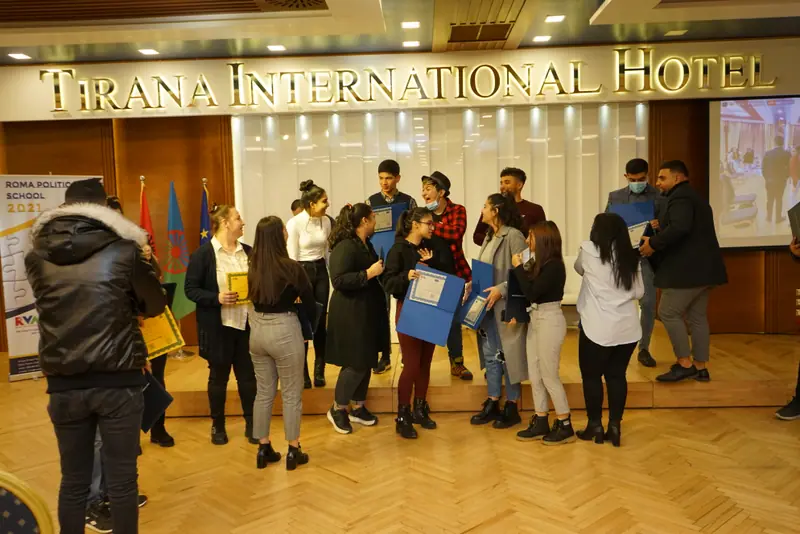
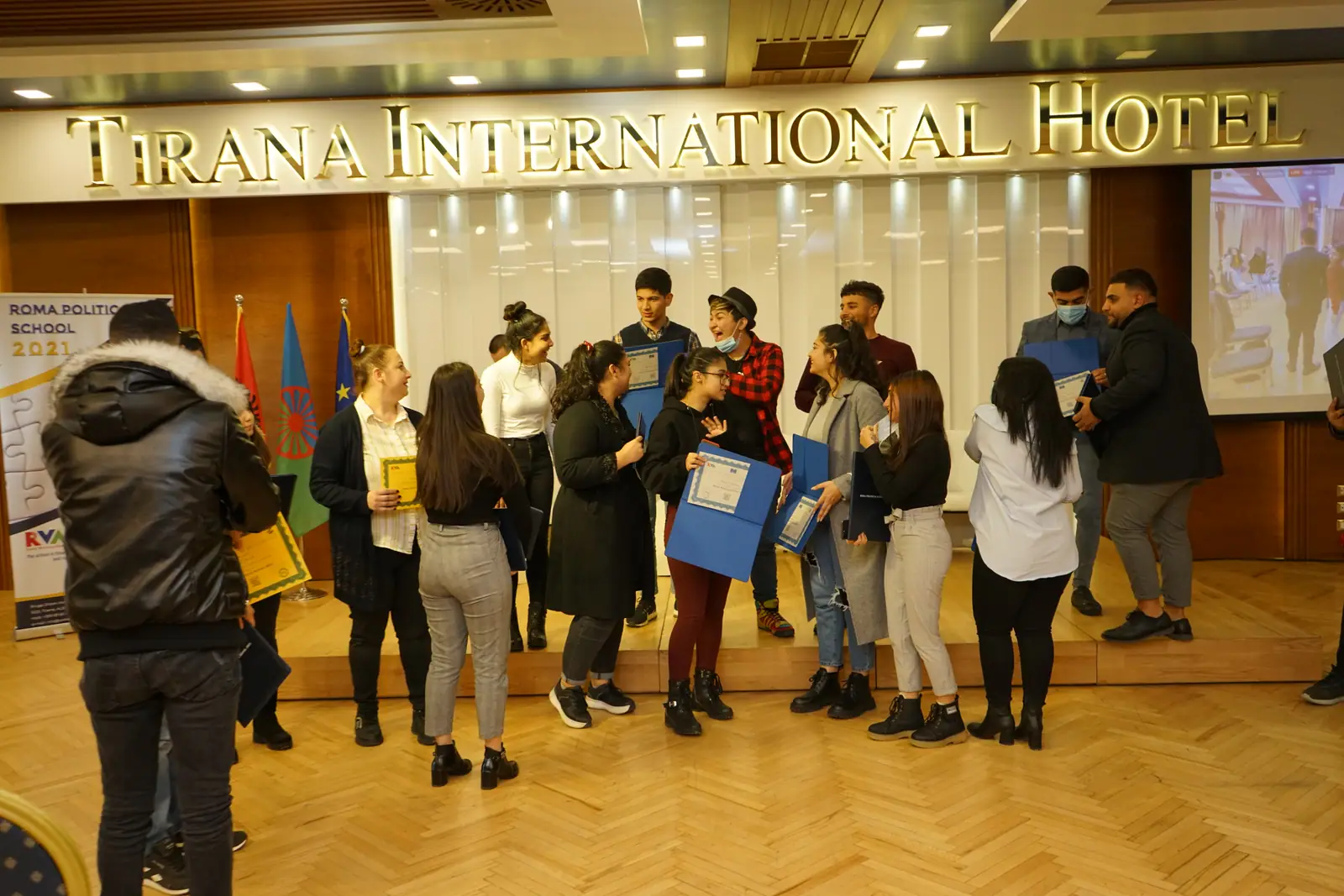
Receiving certificates, December 2021 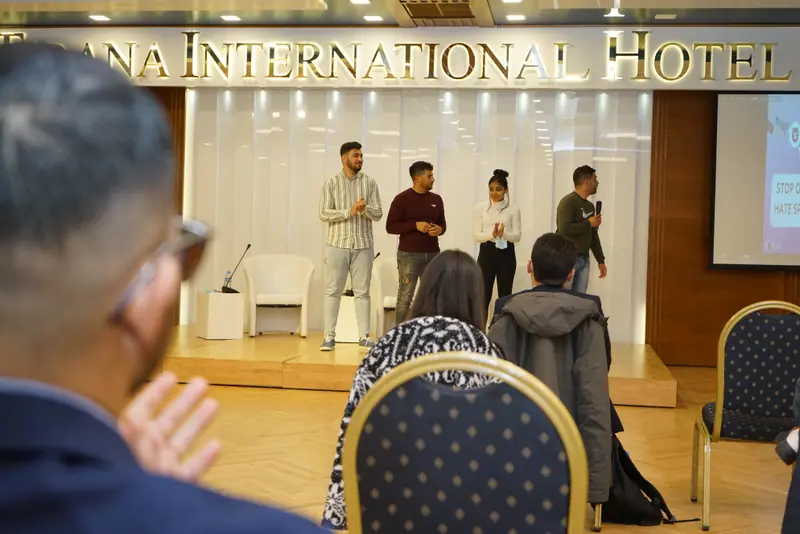
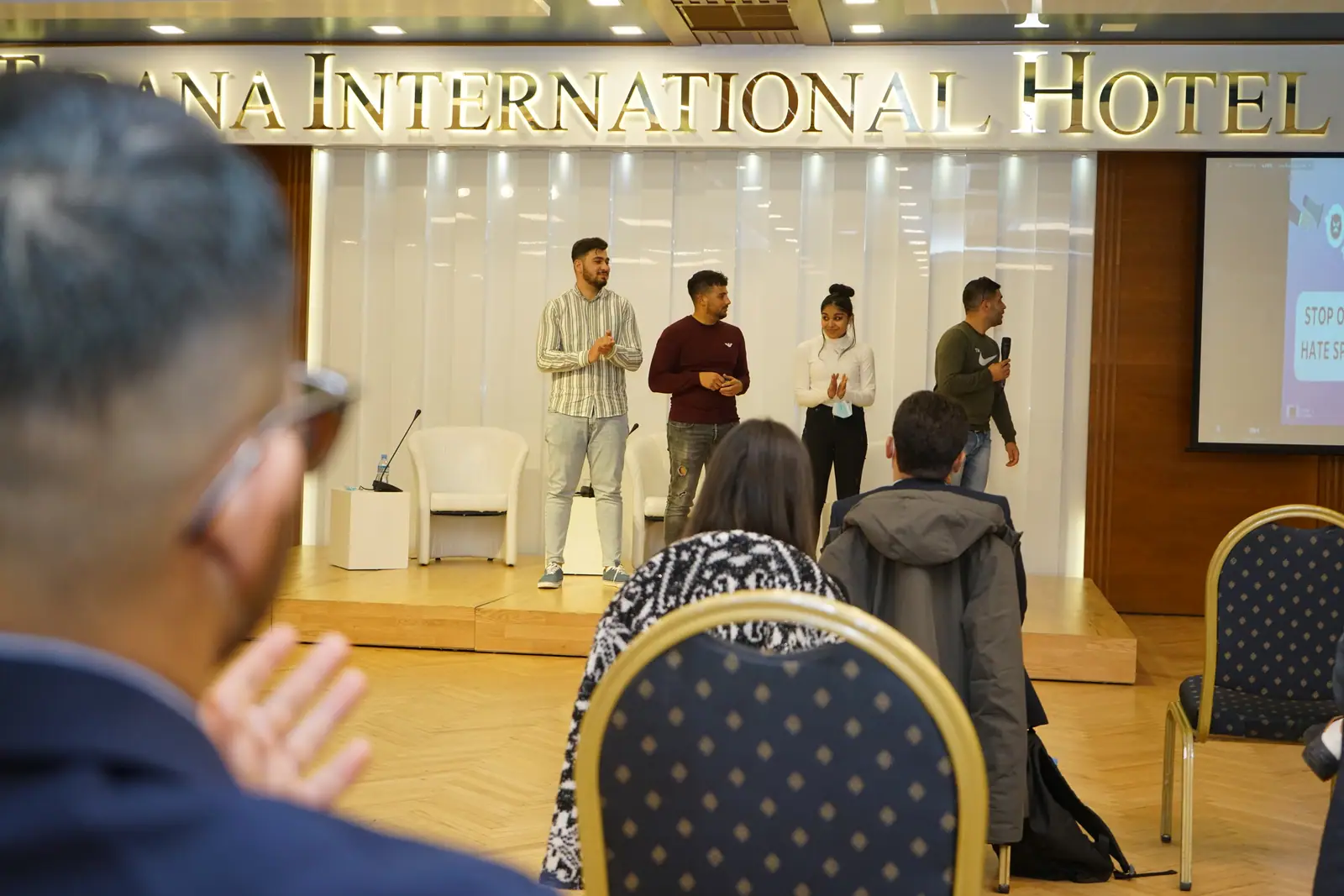
Participants speak at the closing conference 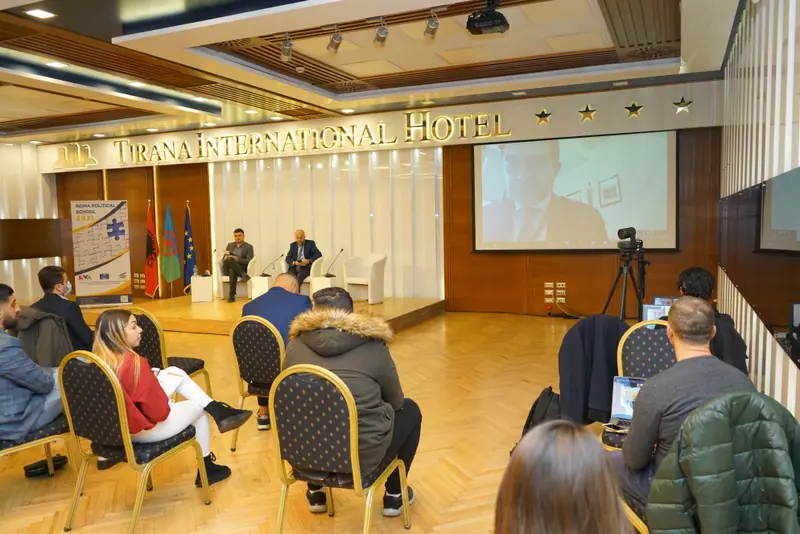
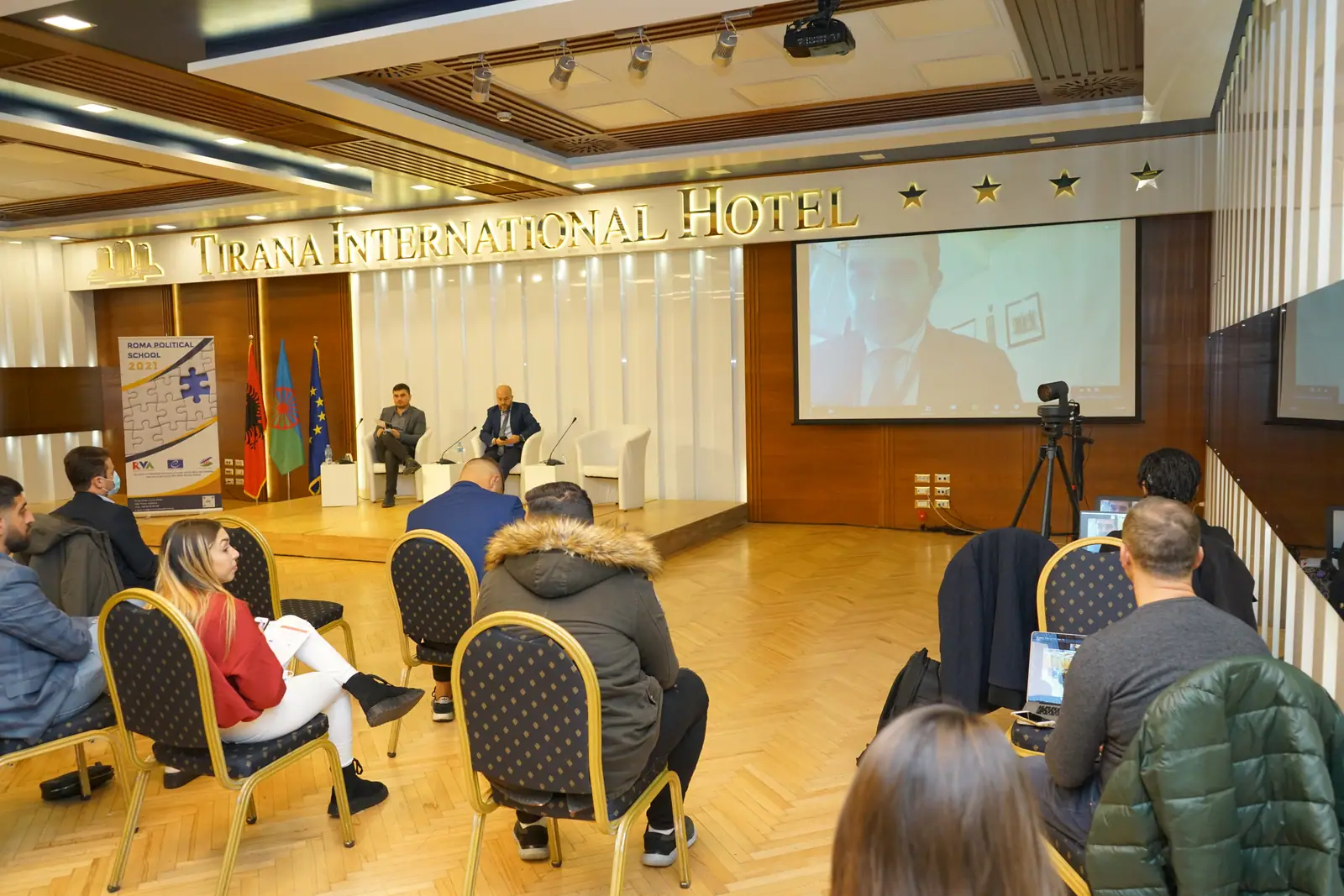
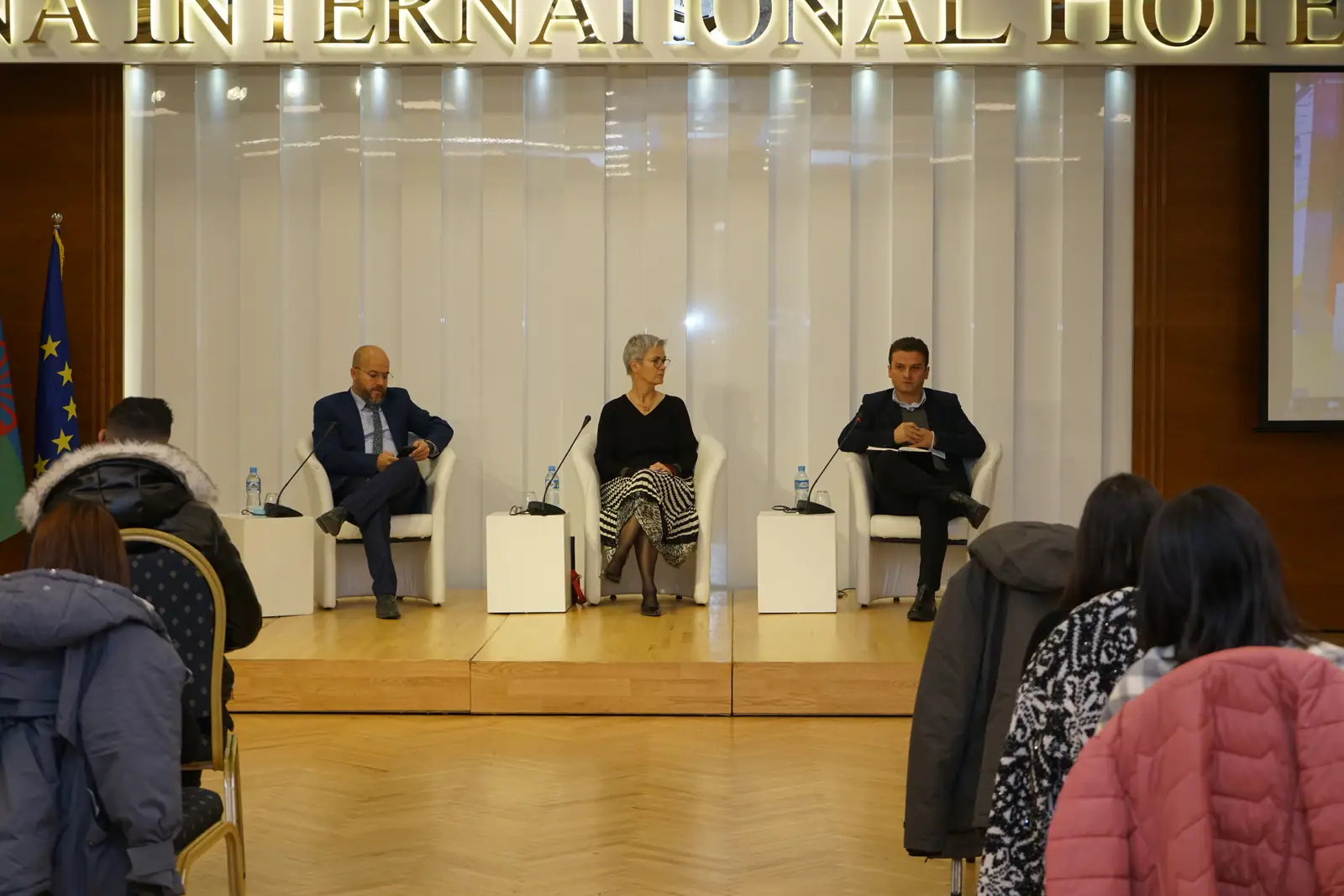
Panel discussion, closing conference 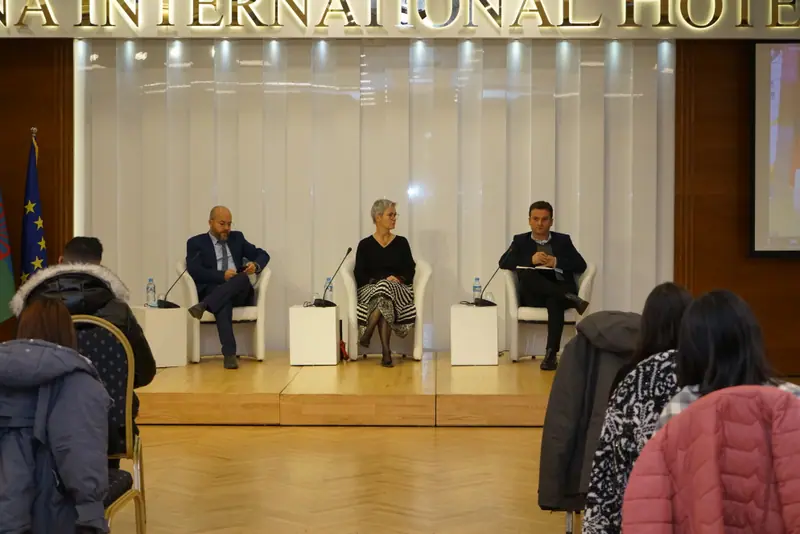
Panellists at the closing conference
Delivered with the support of